2025-2026 Year in Review

View an HTML version of FIFSW’s 2025-2026 Year in Review
A look back on the 2025-2026 academic year
A message from Dean Charmaine Williams
Strong, healthy, and engaged communities — this is what impact in social work looks like. And as we look back on the 2025-2026 academic year, it is the work towards this shared goal that I am most proud of. Some of the outcomes that our faculty, staff, alumni and partners realized in the past academic year include:
- partnering with community members and professionals to improve social workers’ ability to support the increasing number of people living with psychosis,
- addressing the health care access crisis by creating space for social workers as leaders in the development of team-based primary health care,
- building new measurement tools to help human service non-profit organizations assess and improve their poverty-reduction initiatives,
- developing an internationally recognized digital app that helps 2SLGBTQI+ youth boost their mental health and wellbeing,
- matching a record number students with alumni mentors through our alumni mentorship program which helps graduating Master of Social Work students’ transition to the field
- implementing initiatives to support the success and well-being of Indigenous students throughout their academic journey.
This is just a fraction of our community’s accomplishments from this past year. And it’s the culmination of these outcomes, rooted in research, teaching, and local, national, and international partnerships that make us the top school of social work in Canada and — according to an independent analysis, released this year — the world.
I invite you to read more about our activities and their impact in our 2025-2026 Year In Review. This year, we organized the content to align with the five strategic directions outlined in our 2025-2030 Academic Plan, which launched in September 2025. Apparent throughout are the values that guide our work.
I would like to thank everyone who was part of our success over the past year, from our researchers, students, staff, and alumni to our field instructors, volunteers and donors: your contributions make a difference. Together we are leading transformative change.
Sincerely,
Charmaine Williams
Dean & Professor
Sandra Rotman Chair in Social Work

View a PDF of FIFSW’s 2025-2026 Year in Review
In this issue
- FIFSW at a glance
- 2025-2026 Research: by the numbers
- Amplifying our research and impact
- Codesigning learning experiences
- Mobilizing relationships
- Fostering collective thriving
- Promoting social and environmental justice
- Faculty news

View an HTML version of our 2025-2026 Year in Review, below
6 fields of study offering specialized training
503 MSW students
59 PhD students
179 practicum partners
605 Field instructors matched with a student
38 Indigenous Trauma and Resiliency (ITR) field of study partners
54 ITR field instructors
Did you know?
FIFSW is ranked the #1 school of social work in Canada*, in the world**, and in number of social work publications!***
Sources: *Centre for World University Rankings, **EduRank, *** Clarivate Analytics

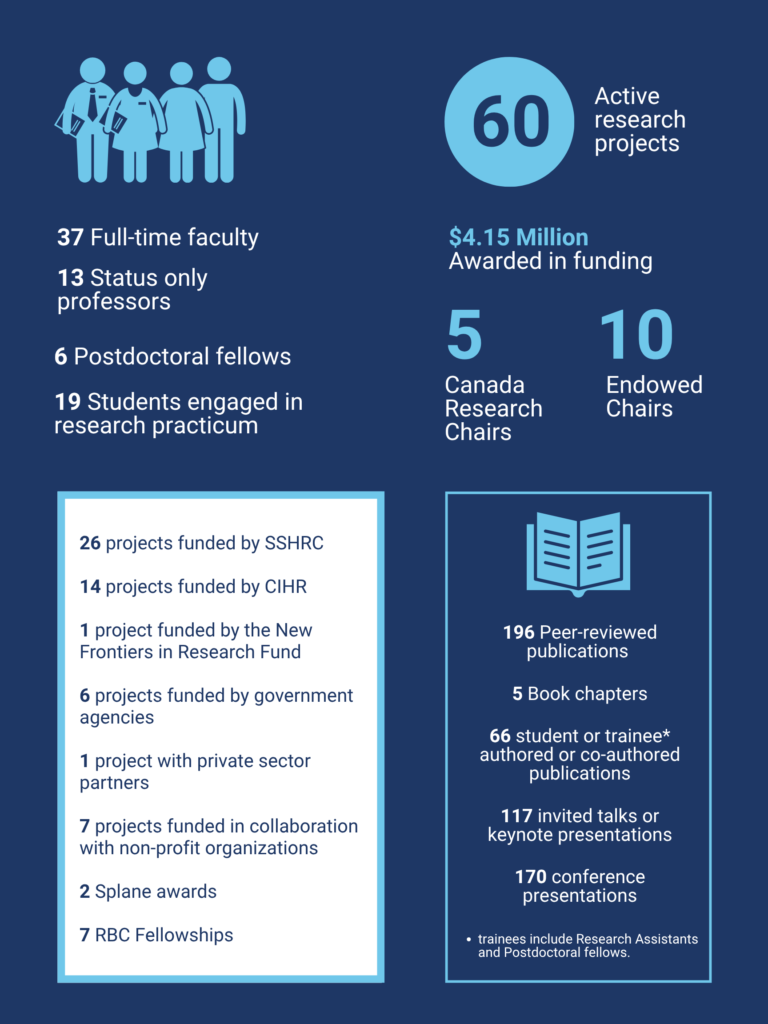
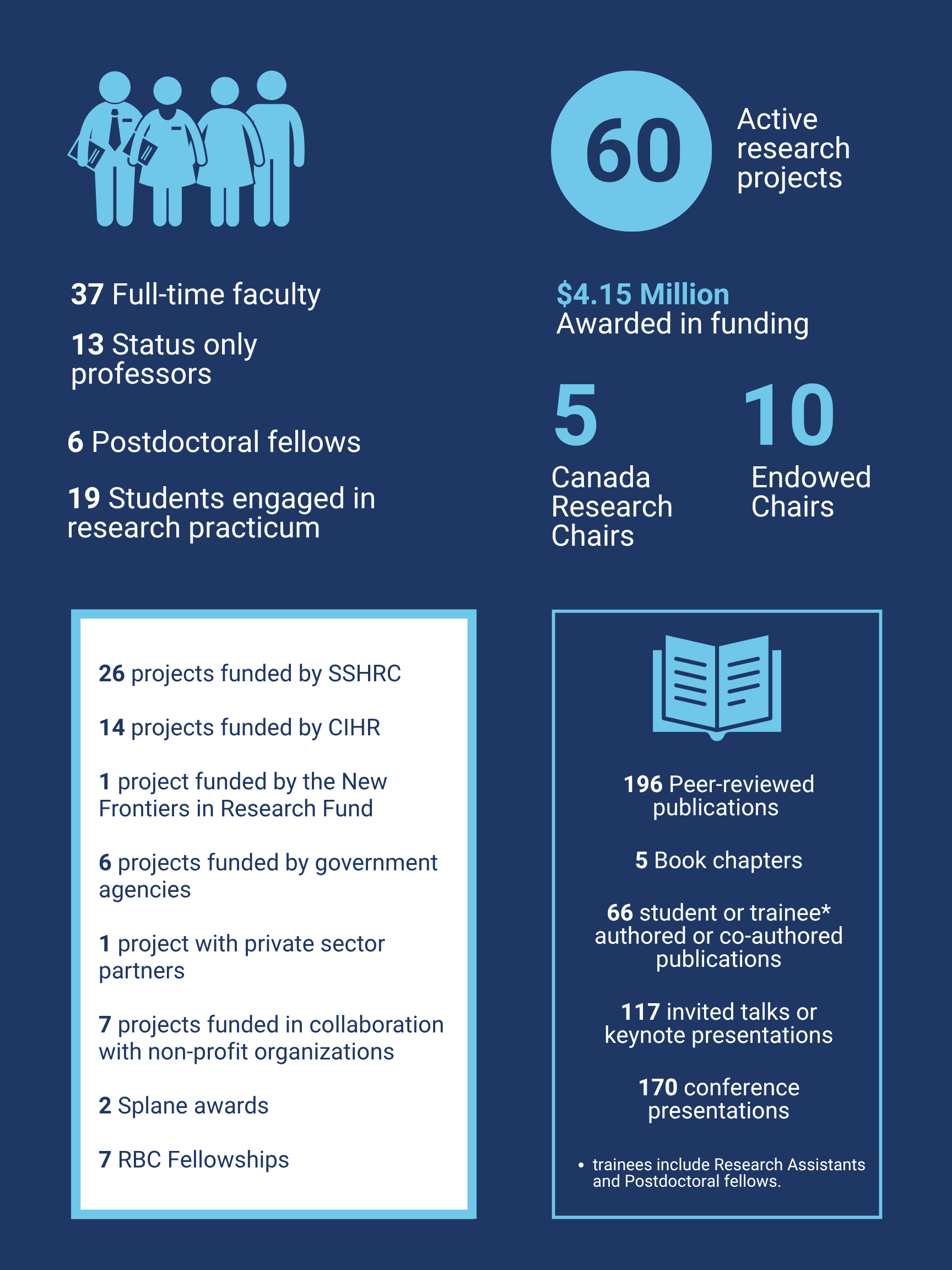
- 37 full-time faculty
- 13 status only professors
- 6 Postdoctoral fellows
- 19 students engaged in research practicum
- 60 Active research projects
- $4.15 Million awarded in funding
- 5 Canada Research Chairs
- 10 Endowed chairs
- 27 projects funded by SSHRC
- 14 projects funded by CIHR
- 1 project funded by the New Frontiers in Research Fund
- 6 projects funded by government agencies
- 1 project with private sector partners
- 7 projects funded in collaboration with non-profit organizations
- 2 Splane awards
- 7 RBC Fellowships
- 196 peer-reviewed publications
- 5 book chapters
- 66 student or trainee* authored or co-authored publications
- 117 invited talks or keynote presentations
- 170 conference presentations
*trainees include Research Assistants and Postdoctoral fellows
Strategic Direction 1: Amplify the local, national, and global impact of our research and knowledge development

FIFSW’s impressive research continued to strengthen practice and influence change. Here are three examples of work that’s making a difference in people’s lives.
Drawing from her years of research as Director of the International Partnership for Queer Youth Resilience (INQYR), Professor Shelley Craig joined It Gets Better Canada and the developer LG2, to create the GLO App, which takes a joyful approach to teaching 2SLGBTQ+ youth how to cope with negative online experiences and advocate for themselves. The international Webby Awards took notice. In April, GLO was nominated for an award in the Education, Culture and Learning category.
Professor Micheal Shier is working with a diverse range of non-profit leaders and staff across Ontario to better understand their poverty-reduction initiatives and the factors that can boost their success. With affordability being a top concern for people across the county and poverty rates increasing, he and his collaborators are working to develop a Community Economic Development Capacity Tool that human service non-profit providers can use to bolster their activities. “The overarching goal,” says Shier, “is to help create systems that allow non-profits, the government and for-profits to be as effective as possible in supporting the overall socioeconomic wellbeing of the population.”
With a background in dance and performing arts, Master of Social Work student Jake Bradshaw was interested in bringing dance to youth as part of an arts-based mental health intervention. When Associate Professor Stephanie Begun, who co-leads the Youth Wellness Lab, learned about this idea, she encouraged him to create a pilot program for a local youth shelter. Working with others from the Youth Wellness Lab, Bradshaw and Begun delivered the program, and engaged in a study on its outcomes. In March, they shared findings from the study with students, faculty, and staff in an interactive workshop. Attendees experienced first hand how dance can support wellbeing and mental health.


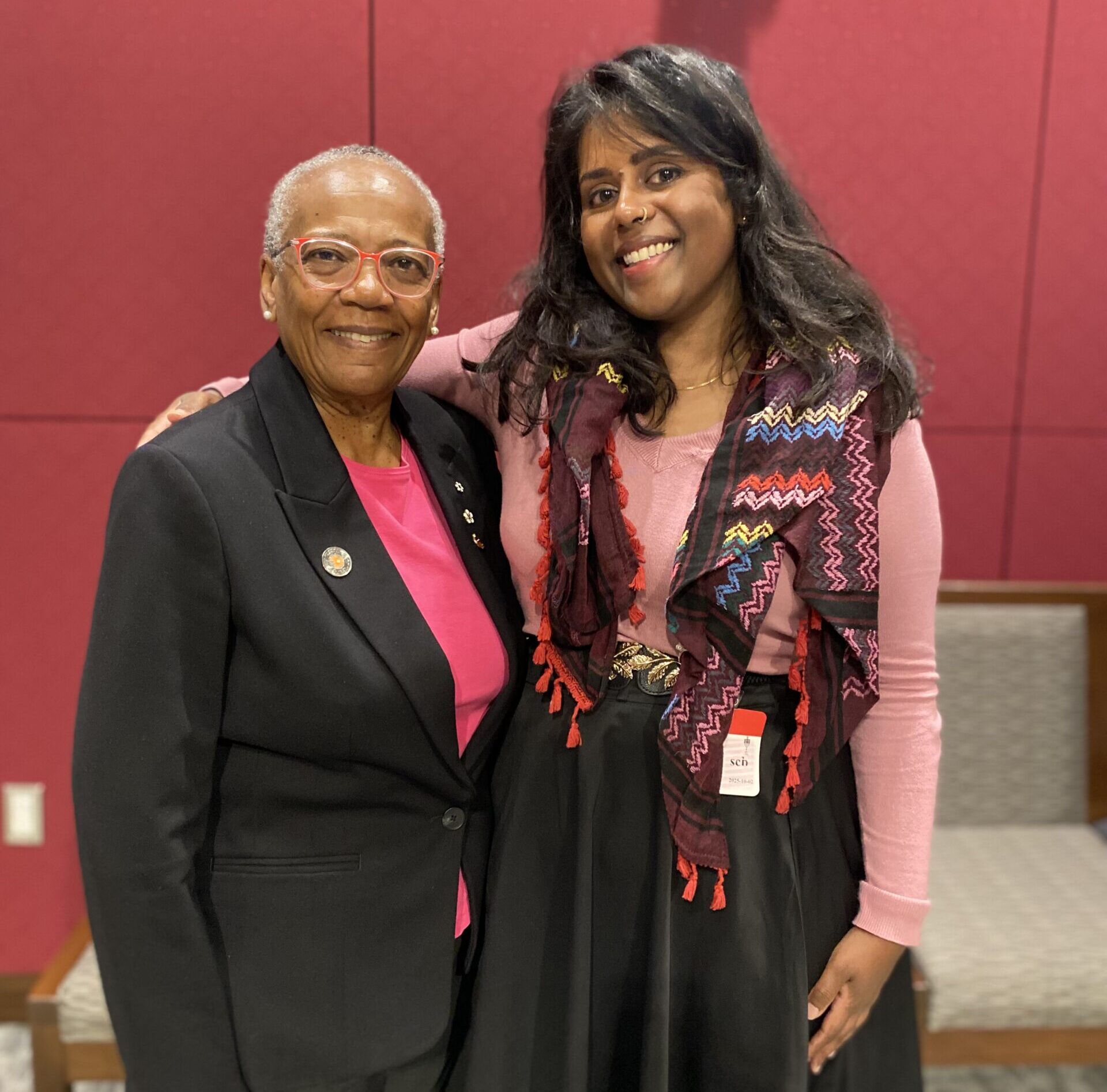
Sinthu Srikanthan, PhD Student and Social Worker in University Health Network’s Red Blood Cell Disorders Clinic, with Senator Wanda Thomas Bernard Expert testimony
FIFSW faculty are no strangers to the House of Commons and Canadian Senate. In past years, Professors Rupaleem Bhuyan and Charmaine Williams have been invited to provide expert testimonies on family reunification and the mental health of young women and girls, respectively. This year, two FIFSW community members were invited to provide testimony to government committees.
First year PhD student, Sinthu Srikanthan (pictured below), a social worker for the University Health Network’s Red Blood Cell Disorders Clinic, was invited to testify to the Senate on BILL S-201, an Act respecting a national framework on sickle cell disease.
Assistant Professor Kyle Ganson provided witness testimony on antifeminist ideology and its impacts on young Canadians’ development and mental health to the House of Commons Standing Committee on the Status of Women. (He also provided expert review of online resources published by the Mental Health Commission of Canada on The Manosphere and Mental Health.)
This expert testimony has impact. In December, the Senate Committee on Human Rights released a new report on the crisis facing youth aging out of government care. 2024 witness testimony from Professor Barbara Fallon and SickKids paediatrician Ashley Vandermorris informed the eight recommendations outlined in the report, which “calls for significant reform to ensure vulnerable young adults are not abandoned to crime, addiction, or homelessness.”
Indigenous social work
In January, FIFSW was thrilled to announce that Indigenous scholar Professor Michael Yellow Bird (pictured above) will be joining FIFSW as the inaugural Lee Wu Kee Ming Chair in Indigenous Social Work starting July 1, 2027. A seasoned academic and researcher, and an enrolled member of the Mandan, Hidatsa, and Arikara (MHA) Nation (also known as the Three Affiliated Tribes) in North Dakota, Dr. Yellow Bird will bring a wealth of experience in community-engaged research, leadership, teaching, and outreach to this new role.

Knowledge transfer: connecting with community
Public lectures are an excellent way to disseminate research findings, insights, and expertise to broad audiences. Here’s list of some of the in-person and online talks that were presented this year.
OCTOBER: Assistant Professor Ashley Quinn discussed findings and insights from her research on Indigenous wisdom, child welfare and collective care in an Alumni Association webinar.
NOVEMBER: Professor Ramona Alaggia highlighted key insights from her years of research on childhood abuse and discussed the far-reaching impacts of new challenges affecting children, such as online harms. Held at Hart House, her lecture was the part of the Janis Rotman Distinguished Lecture Series on Mental Wellness.Watch her lecture Rescue and Recovery: Building Resilience With Children, Families, And Communities, here. FIFSW is grateful for Janis Rotman’s generous support of FIFSW’s Talk It Out Online Counselling Clinic, which inspired the launch of this series.
APRIL: Professor Tanya Sharpe and Neighbourhood Ambassador Coordinator Deshawn Hibbert shared findings from “In the Aftermath”— a study that used qualitative methods and digital storytelling to understand how Black youth experience grief, loss, and unmet need following the murder of a family member or friend and what practitioners and systems must do differently to support them.
MAY: Over 700 people tuned in for an online talk by Professor Esme Fuller-Thompson and recent PhD graduate Mabel Ho, now a researcher with the Institute for Life Course and Aging. Their lecture answered the question: What is successful aging, and how do we achieve it?
JUNE: Professor Lin Fang presented an stress-free degree lecture on talking to kids about race, drawing from her extensive studies on the experiences on anti-Asian racism. Her talk highlighted current challenges as well as roles that schools and communities can play in supporting these conversations.
FALL 2025: FIFSW re-launched its Postdoc Talks lecture series, which featured presentations from postdoctoral fellowsLuissa Vahedi on state fragility in global health, James Stannah on bringing lived realities into quantitative research, Julien Brisson on navigating antiretroviral therapy access in Colombia, and Yin Wang on inequalities and sexual health among adolescents in the Northwest Territories.
The Institute for Life Course and Aging
Advancing research, education, policy, and practice to improve the lives of older adults and promote healthy aging across the life course

The Institute for Life Course & Aging (ILCA) 2021–2026 Five-Year Report highlights a period of remarkable growth, innovation, and impact in aging research, education, and knowledge mobilization. Over the past five years, ILCA expanded its interdisciplinary community to 121 faculty members and research affiliates, whose groundbreaking research number more than 2,900 publications. It also celebrated 168 graduate students who completed its Collaborative Specialization in Aging, Palliative & Supportive Care across the Life Course.
The report marks an important leadership transition, celebrating the conclusion of Professor Esme Fuller-Thomson’s 11 years of exceptional service as Director, during which the Institute significantly broadened its reach, strengthened its impact, and achieved greater international recognition. (Fuller-Thomson is pictured, top, left.) Effective July 1, 2026, Professor Amanda Grenier (pictured, top, right) assumed the role of Director, bringing extensive expertise in aging studies and leadership experience from McMaster University’s Gilbrea Centre for Studies in Aging.
Over the past five years, the Institute for Life Course and Aging (ILCA) delivered 46 professional development workshops, and reached thousands of healthcare professionals working with older adults through seminars, public events, social media, educational videos, and community-engaged initiatives.
View videos from ILCA’s 2025-2026 Research Seminar Series.
PhD dissertations examining critical issues
FIFSW’s PhD students contribute to the Faculty’s knowledge development and impact through advanced empirical research. Here’s a look at the dissertations from our Fall 2025 and Spring 2026 graduates.
Natasha Brien
Once Upon a Prison There Lived Love: A Narrative Exploration of Identity Disclosure among Womxn in Intimate Relationships with Federally Imprisoned Men in Canada
Advisor: Rupaleem Bhuyan
Kaitrin Doll
Reimagining Sport Through a Social Justice Lens: Sexual and Gender Diverse Experiences in Roller Derby
Advisor: Shelley Craig
Travonne Edwards
Interrupting Anti-Black Racism: Examining Physical Abuse Allegations Against Black Families Navigating Ontario’s Child Welfare System
Advisors: Barbara Fallon and Bryn King
Zhizhong Kai
Digital Technology and Social Work: Utilizing Chatbots for Testing and Assessment
Advisor: Micheal Shier
Patricia Lenz
Making (Radical) Change Real: Understanding the Relational Elements Necessary to Undertake Transformational Social Innovation Between Nonprofits and Local Governments
Advisor: Micheal Shier
Olive Lyons
Child Welfare Worker’s Decision-Making in Child Sexual Abuse Investigations
Advisor: Barbara Fallon
Carolyn O’Connor
Exploring early adolescents’ perceptions of sexual consent: A mixed methods analysis
Advisor: Ramona Alaggia
Rachael Pascoe
Fostering Connection and Healing: An Intervention Study to Understand Adolescent Sexual Offending Treatment Effects, Mechanisms, and Worldviews
Advisor: Shelley Craig
Keri West
Adverse Childhood Experiences and Inflammatory Diseases in Mid- to Late-Life: Findings from the Canadian Longitudinal Study on Aging
Advisor: Esme Fuller-Thomson
Ruth Wilson
Absences, obstructions and emergences in the Cognitive Empire: A critical review of community-based, participatory action research (CB/PAR) in social work
Advisor: Tat Tsang
Lung Yu
Precarious Employment, Immigration, and Mental Health in Canada: Temporal, Intersectional and Contextual Perspectives
Advisor: Lin Fang
Strategic Direction 2: Codesign innovative and excellent learning experiences

FIFSW faculty members are building innovative approaches to social work education in partnership with students, services providers, and service users. And their innovations continue to inspire educators across Canada and beyond.
Assistant Professor Amar Ghelani hit the ground running after joining FIFSW in 2024. At the Canadian Association of Social Work Educators conference in June, he presented two teaching projects that he developed and implemented with the help of FIFSW colleagues and partners this past year.
The first involved using AI to create a simulated client that students could practice supporting in an online chat format. With growing use of online chat-based counselling, there is a need to build these skills, and as AI usage grows, Ghelani is keen to discover how it can be used to enhance learning rather than undermine it.
Ghelani’s second project addressed the need to better educate students on how to support people with psychosis, the rates of which are rising. For this initiative, Ghelani partnered with people with lived experience to build new learning materials, including an online education guide, recorded interviews, a guide for actors portraying clients in simulations, and in-person presentations.
Associate Professor Keith Adamson has long been known for his leadership in teaching innovation — in particular, bringing service users from the community into the classroom. This year, he was invited to help develop a new Specialized Curricular Guide on Service User Involvement in Social Work Education in collaboration with the Council of Social Work Education. “Involving service users in social work education, whether through curriculum development, teaching, or assessment has been shown to raise students’ awareness of the social issues that affect clients and their families. It also reduces stereotyping and negative attitudes towards marginalized populations,” says Adamson. “This is becoming increasingly essential to social work training.”


3 more innovative initiatives advancing learning for students
The Intergenerational Classroom, led by Assistant Professor (status only) and Sessional Instructor Raza Mirza with support from the Institute for Life Course and Aging, returned for its third year this past fall. The unique course welcomes enrolment from both undergraduate students and older adults who reside at Christie Gardens, a Toronto-based retirement community. Decades apart in age, classmates share “learning and exploration in aging, gerontology, and geriatrics.” The course received extensive media coverage.
PhD student Katie Stadelman and course instructor Associate Professor Rachelle Ashcroft enlisted social work leaders from FIFSW’s community to play the roles of Standing Committee members in a simulated “Mental Health and Addictions Advisory Panel Committee” meeting. The simulated a meeting was recorded for students in SWK4412 The Context of Mental Health and Health to illustrate the differing priorities and tensions between stakeholders.
Pain Week is a 3-day, 20-hour interprofessional curriculum where social work students learn and collaborate with students from different health disciplines to understand the nature of pain and how to help people who struggle with it. The curriculum is a part of U of T’s Interprofessional Education (IPE) Curriculum. Assistant Professor Amar Ghelani was the Pain Week coordinator for 2026.
Evidence for the safety and efficacy of student-led clinics
Student-led clinics remain scarce in social work, but a study led by Professor Lin Fang (pictured above) published this year found that they can provide safe and effective care. Fang founded FIFSW’s Talk It Out Counselling clinic to provide free mental health support to marginalized communities. The clinic is staffed by Master of Social Work students who have the opportunity gain valuable supervised counselling experience.

Co-curricular learning opportunities prepare students for diverse practice and community care

On January 13, FIFSW hosted a Naloxone training workshop for Master of Social Work students presented by Social Service Worker Rei Murakami. Murakami, who works in harm reduction and has lived experience of substance use, brought expired Naloxone kits to the session to provide students with hands on experience preparing the materials for use.
Between November and January, the Associate Dean Academic’s Office hosted the Practice Skills for Complex Areas of Professional Practice Speaker Series. This engaging series offered students valuable, hands-on learning opportunities designed to strengthen their readiness for field placements. Speakers included Emily Imrie (Salvation Army), Kristin Booy (Yonge Street Mission), Aashik Paliyath (Unity Health), and Paula De Jesus (Abrigo Centre). Their contributions provided students with meaningful insights into frontline practice and enriched learning through real-world perspectives.
Setting up new students for success
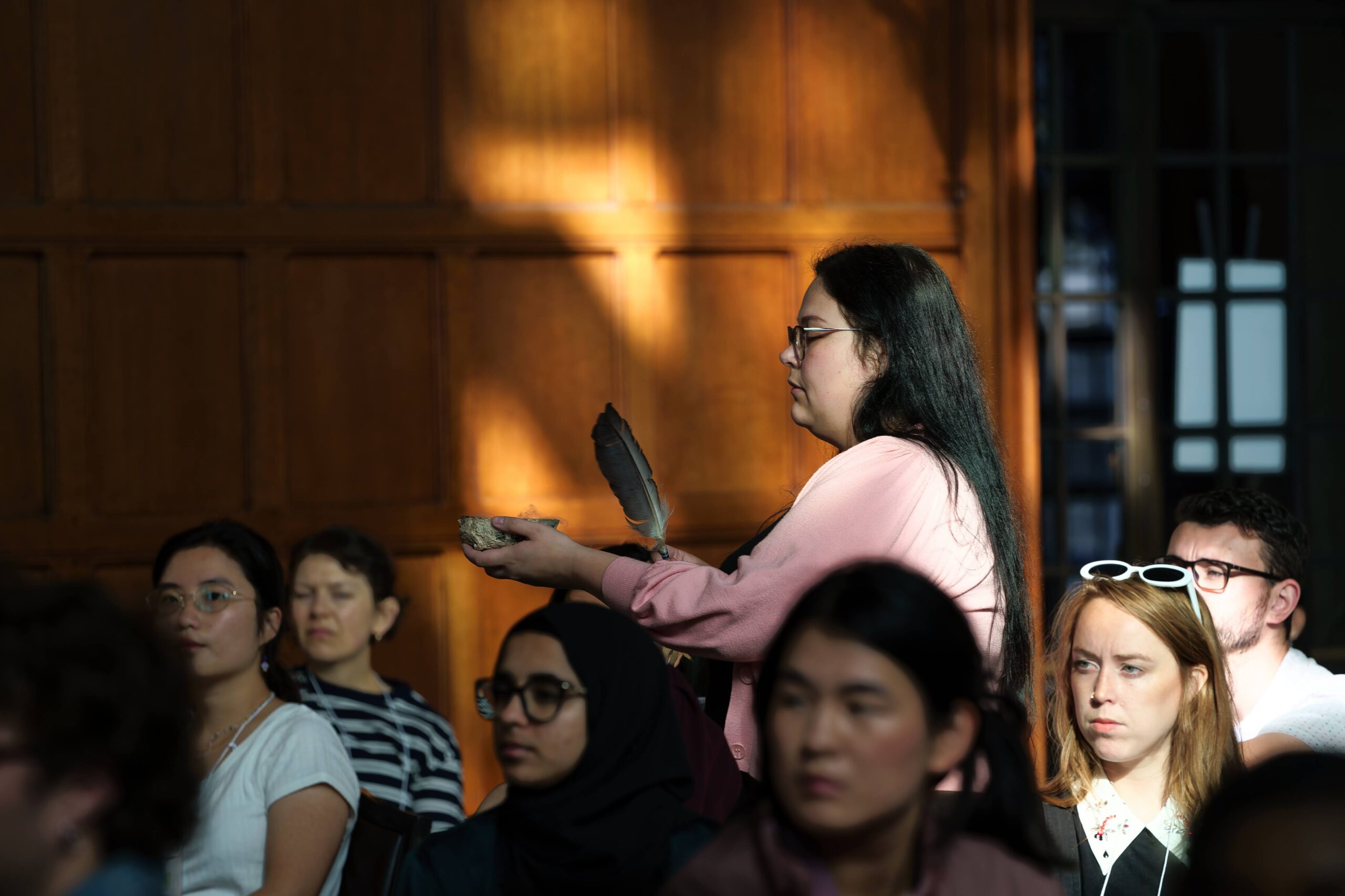
On September 3rd to 5th FIFSW hosted orientation sessions, an Introduction to Social Work Conference, an Equity, Diversity, and Inclusion (EDI) workshop, and the inaugural Indigenous Learnings Workshop for new students. FIFSW ambassadors and representatives from the Graduate Student Association were on hand to welcome new Master of Social Work students at Hart House. The events gave new students the opportunity to not only learn important details about their program and resources at FIFSW but also meet their classmates and begin the process of building relationships.
Strategic Direction 3: Mobilize relationships with practice communities

Advancing meaningful change requires partnerships that extend beyond the university and building interdisciplinary relationships with community leaders and those in professional practice.

It’s an approach that Associate Professors Keith Adamson and Rachelle Ashcroft (pictured above) know well. Their research, education, and outreach have long focused on interprofessional education and the role of social workers as essential members of primary health care teams. In October, they held the first National Summit on Social Work in Primary Care, which brought together social work clinicians, researchers, educators, and policymakers from across the country to develop a clearer vision for the role of social workers in strengthening primary care. The event brought them a step closer to building stronger health care teams throughout Canada — and promoting social workers as leaders in the process.
In the fall, U of T’s Centre for Community Partnerships and Centre for Research Innovation and Support presented an event on the insights and impact that is possible when faculty members partner with communities. Professor Barbara Fallon and Amber Crowe, Executive Director of Dnaagdawenmag Binnoojiiyag Child & Family Services, shared the challenges and successes they experienced in “working collectively from the academy, child welfare agencies, and First Nations organizations to deepen understanding of the over-representation of First Nations children in the Ontario child welfare system.”
In May, Assistant Professor Ashley Quinn led FIFSW’s participation in the Moose Hide Campaign — an Indigenous-led grassroots movement that aims to end violence against women, girls, and everyone on the gender continuum through education, outreach and advocacy. “As social work educators we are committed to fostering spaces for learning, reflection, and connection,” sais Quinn. “Through these spaces, we equip our students with the knowledge, skills, and courage to take meaningful action to prevent and elimininate gender-based violence. Every person deserves to live free from fear, harm, and all forms of violence.”
Strengthening social work education in partnership with practice communities
Collaborating with practice communities to establish FIFSW as a hub for leading-edge professional and doctoral education for social workers is vital to our mission.
In April, FIFSW held a Field Instructor Appreciation Breakfast in the 7th floor Janis Rotman Student Lounge. The event was an opportunity to not only celebrate those who have provided field education to our students in practice but also bring together field instructors and faculty to share insights and experiences.
The Appreciation Breakfast was one of many events held by our Practicum Office this year. In the 2025-2026 academic year, the Practicum Office held 10 professional development sessions for field instructors, 9 Faculty-Field Liaison group meetings, and 7 information sessions for students. Student events hosted by the Practicum Office also included interview practice sessions, a “Day in the Life of a Social Worker” panel discussion and a panel on becoming a field instructor to encourage students to consider taking on the role after graduation.
University of Toronto Arbor Awards
The University of Toronto’s Arbor Awards recognize U of T volunteers who, through their exemplary generosity of time and talent, make sustained and valuable contributions to the U of T community. This year, FIFSW was pleased to honour honour Elizabeth M. Creal and Danielle M. Grandmaison for their contributions to field education. We are so grateful for their sustained partnership and support!

Highlighting the vital relationships that develop during practicum

In honour of Social Work Week this year, students and field instructors were invited to share “supervision selfies” of themselves on the job. Students were also invited to share testimonials. A total of 28 selfies as 27 testimonials were submitted, highlighting student-field instructor relationships across a variety of practice sites. The project made relational work visible and provided near-daily heart-warming content to share on social media.
A huge thank you to all the field instructors and practicum sites who supported our students this year. Practicum is one of the most important elements in the education of future social workers, and we are extremely grateful for your participation in our program!
Interested in becoming a field instructor? Reach out to FIFSW’s Practicum Office at practicum.fsw@utoronto.ca to learn about the benefits of taking on this important role.
Alumni Mentorship Program
The Alumni Mentorship Program supports the transition of graduating students into the field of social work by connecting them with alumni of the program. This year, we paired 71 students with alumni mentors – the highest number in this program’s history!
Mentors met with their mentees at least once per month between February and April. To help facilitate thoughtful and nuanced conversations, participants received monthly newsletters with a theme relevant to emerging social workers, a set of guiding questions to support mentor-mentee discussions, and an interview with one to three alumni mentors. Three events were held for participants throughout the program: a Kick-Off event in January, a free headshot photography event in March, and a Wrap-Up event in April.
Interested in becoming an alumni mentor in 2026/2027 academic year?
Contact studentengage.fifsw@utoronto.ca
FIFSW Alumni Association

FIFSW benefits from an active Alumni Association, which helps keep graduates connected to the Faculty — and each other — through alumni-specific events, participation in the alumni Mentoring Program, student support and more. We’d like to thank those who have volunteered their time and expertise to lead this important group, including:
President: Andria Allen (pictured above)
Vice President: Phylicia Crichlow
Treasurer: Erical Appleton-Forbes
Secretary: Terese Weisberg
Past President: Judy Newman
Members at Large: Matthew Regan, Pam Weir, Michelle English, and Merva Hutchinson
Committee & Sub-Committee Chairs: Matthew Regan (Constitution Review & Governance), Gajathree Ananthathurai (Communications and Outreach Co-ordinator), Andria Allen (Nominations)
Representatives on Faculty Committees: Terese Weisberg (College of Alumni Electors), Pam Weir (Faculty Council Rep); Phylicia Crichlow (Mentorship Program and Practicum Advisory Committee), Erica Appleton-Forbes (MSW Studies Committee), Michelle English (Practicum Advisory Committee), and Andria Allen (Equity, Diversity and Inclusion Committee).
Class of 1976 50th Anniversary Reunion

On June 14, FIFSW welcomed 24 graduates from the Class of 1976 back to the University of Toronto to celebrate their 50th anniversary reunion. A special thank you to Michael Kerman and Kerrin Churchill for organizing this event and for reaching out to friends and colleagues to encourage them to attend, and to Jim Clendinning for to helping track down classmates!
Strategic Direction 4: Foster collective thriving across the Faculty and the field

Supporting student success and the health and wellbeing of our community and professionals in the field is crucial. Below and on the following pages are some of the ways we are working to promote collective thriving at FIFSW.
Strengthening student success
Whether it is through establishing endowments or contributing to one of FIFSW’s future funds, gifts to FIFSW are what make it possible for so many in our community to realize their dreams.
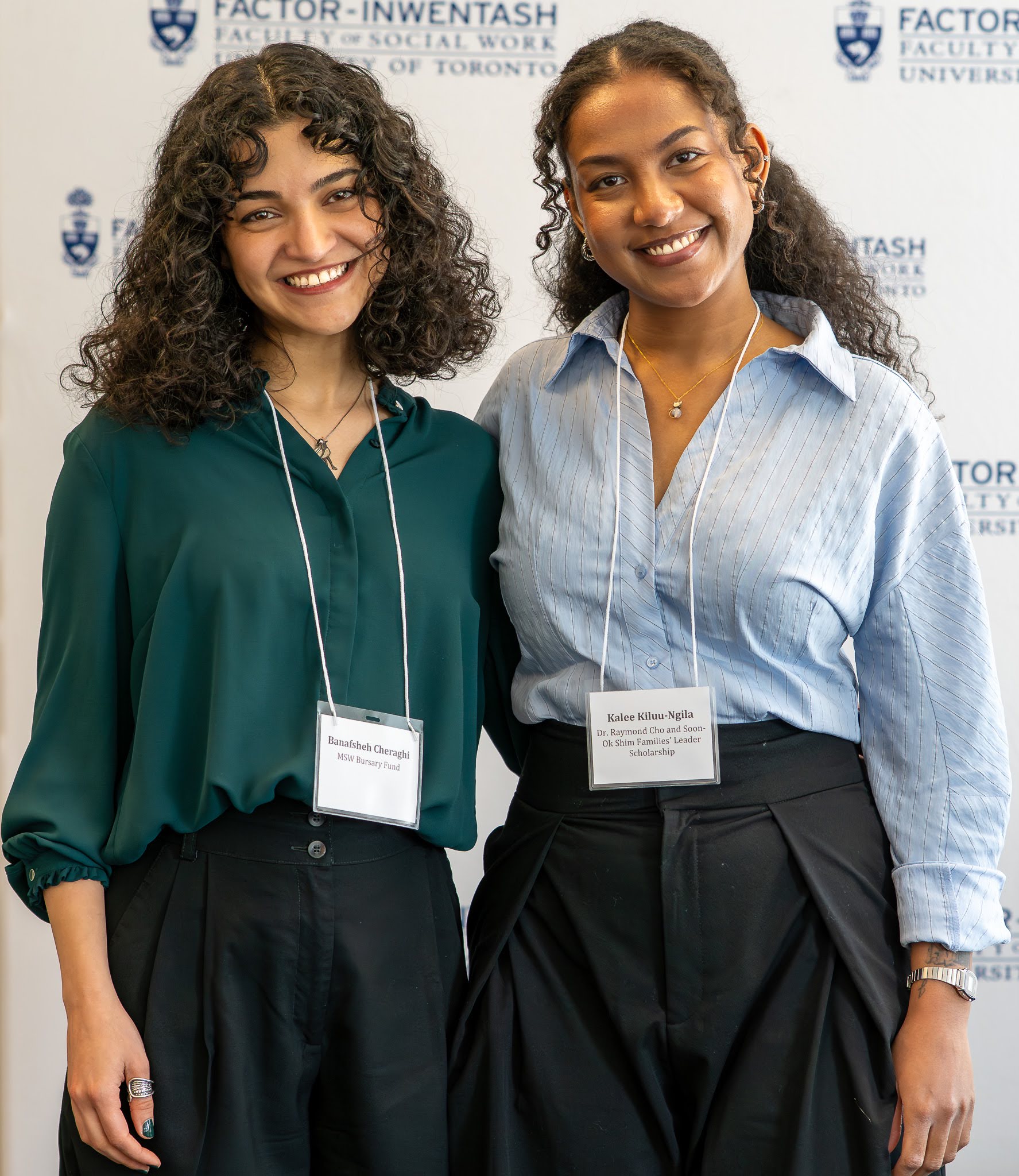
FIFSW’s Annual Community Appreciation Event brings together students and faculty members with those who support their success. The event is not only an opportunity for FIFSW to express its gratitude; it’s an opportunity for donors to hear about the impact of their contributions from the students themselves.
Every year, FIFSW also hosts a dinner for representatives from the Fu Hui Education Foundation and current students from the Master of Social Work – Indigenous Trauma and Resiliency (ITR) field of study. The annual appreciation event is just one of the ways for FIFSW to celebrate the generosity of the Foundation, which has supported ITR students pursuing their studies in the one-of-a-kind program since 2018. The dinner also offers an opportunity to recognize the exceptional students in this field of study.
The annual appreciation event is just one of the ways for FIFSW to celebrate the generosity of the Foundation, which has supported ITR students pursuing their studies in the one-of-a-kind program since 2018. The dinner also offers an opportunity to recognize the exceptional students in this field of study.
“Thanks to the generosity of visionary leaders like you, I’ve been able to continue this journey into my second year. Your contributions don’t just support individual students, they help create an environment where innovation in social work can thrive, nurturing the next generation of clinicians, researchers, organizers, advocates, and more.”
— Jeremy Mesich, MSW 2026
Newly endowed PhD award for emerging leaders in research
Thanks to the generous support of the Lee Wu Kee Ming Foundation, the Factor-Inwentash Faculty of Social Work established the Lee Quen & Kee Ming Fellowship, a new endowed PhD award that strengthens support for emerging research leaders. This investment was further amplified through the University of Toronto’s PhD Matching Program, which matches a donor gift of $100,000 at a ratio of 1.5 to 1, creating a $250,000 endowed award that generates approximately $10,000 annually in support of a PhD student’s funding package.
By enhancing financial support for doctoral students, this initiative helps attract and retain exceptional scholars from Canada and around the world, ensuring that the next generation of researchers, innovators, and leaders can pursue impactful work that advances knowledge and social change.
The creation of the Lee Quen & Kee Ming Fellowship reflects the transformative power of philanthropy and its lasting impact on research excellence at FIFSW and across the University of Toronto.
7 PhD students received RBC Graduate Fellowships in Applied Social Work Research
Funded by RBC, the Ontario government, and U of T, the RBC fellowship supports PhD students in applied research through research training and financial support.
This year’s RBGF recipients include:
- Ofir Sivan
- Rushdia Ahmed
- Abigail Lash Ballew
- Monique Clarke
- Andrew McKenzie
- Kristen Nolan
- Heba Ragheb
Helping our student communities thrive
Creating opportunities to gather in person, in community, is one of the ways FIFSW works to promote collective thriving for its students, alumni, staff, and faculty.
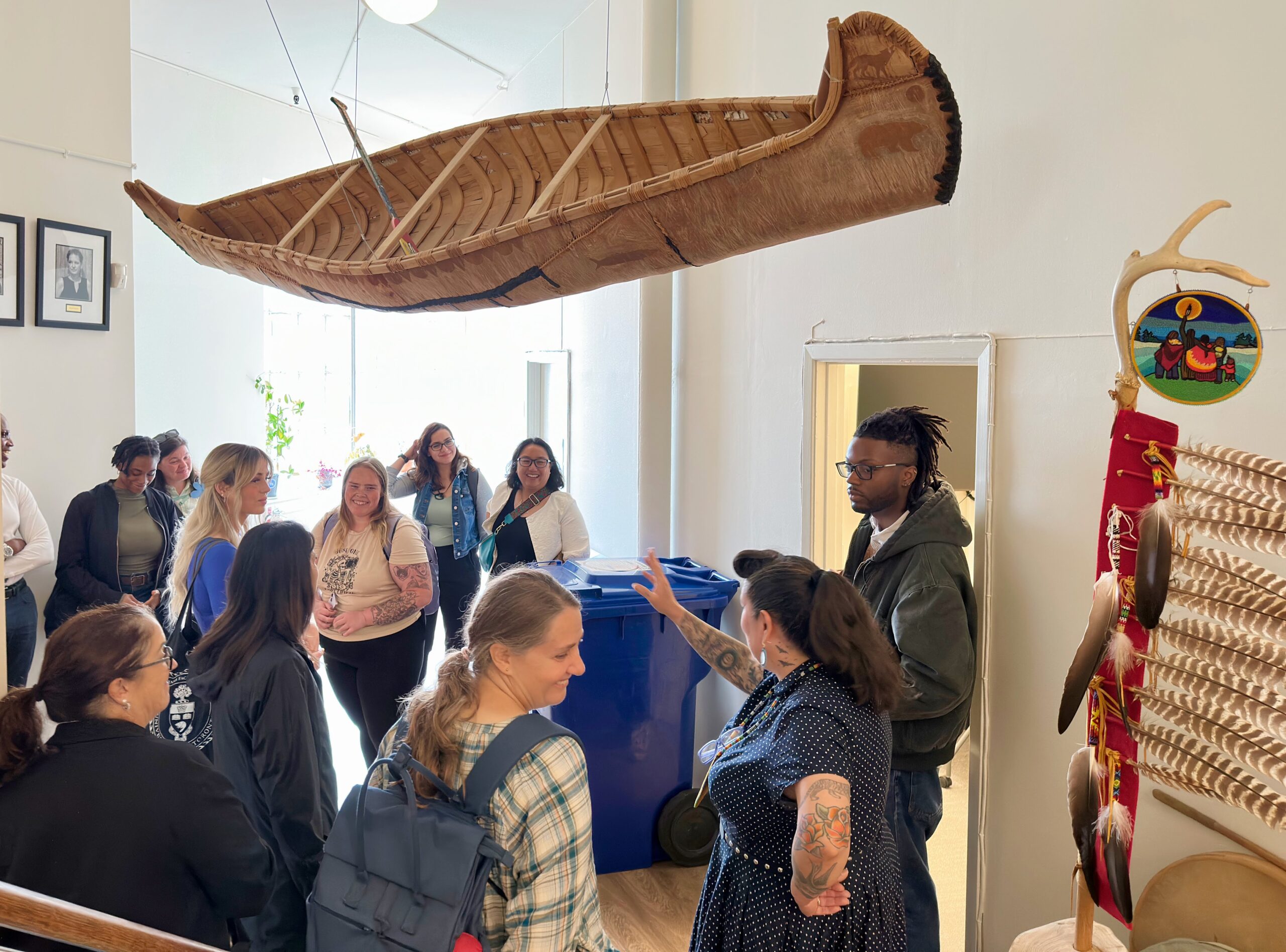
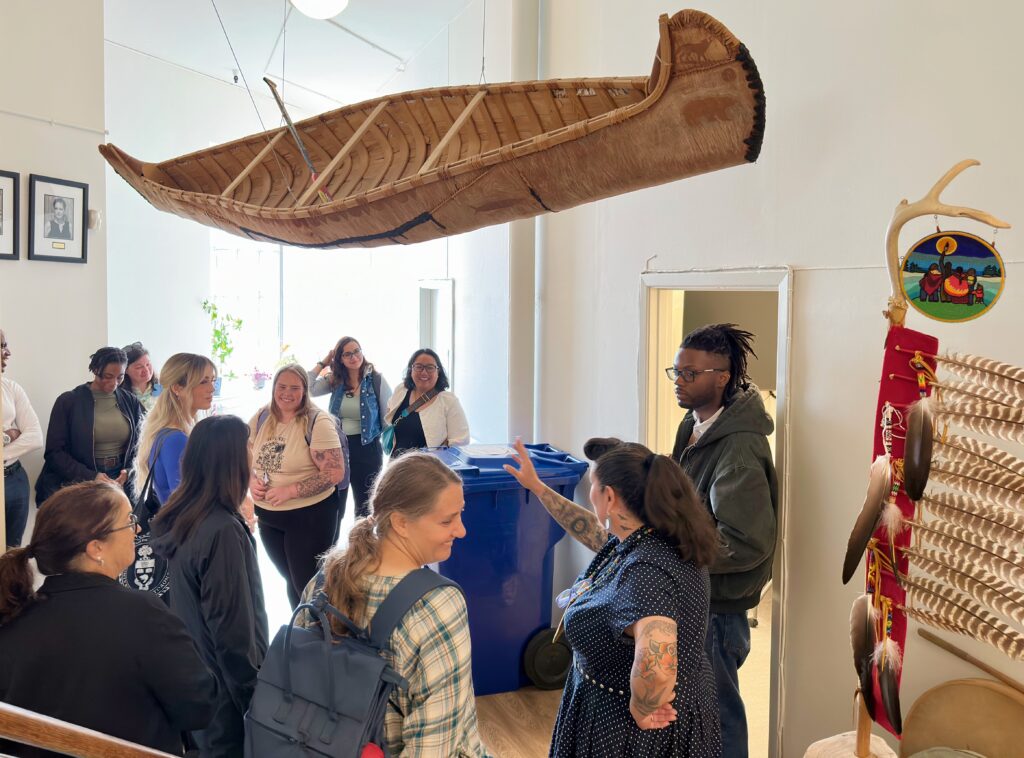
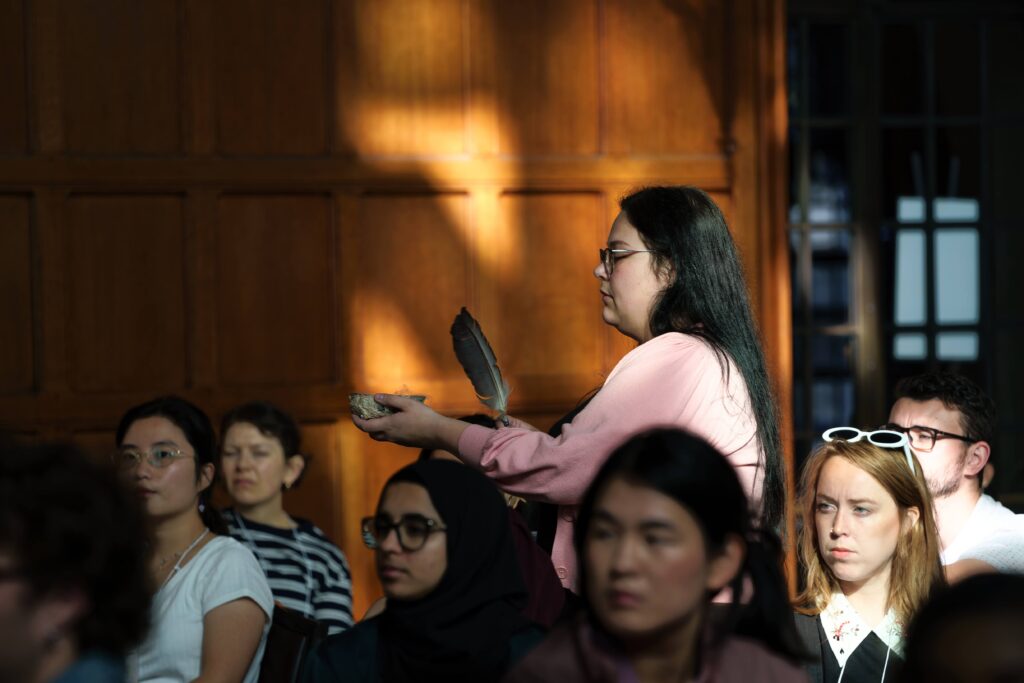
In September, students, faculty and staff visited the University of Toronto’s First Nations House to forge connections and build relationships with the Student Life service centre — and each other. The visit was proposed by FIFSW’s Truth and Reconciliation Collective as a way for students across FIFSW’s programs, including the Indigenous Trauma and Resiliency field of study, to connect with each other and form bonds.
In November, FIFSW, in collaboration with the Muslim Social Work Student Association, welcomed the Muslims in Canada Archives to share an exhibit tracing early approaches to social work in the Muslim community, featuring stories from alumna Mubarka Alam, one of the very first social workers to assist Muslim students.
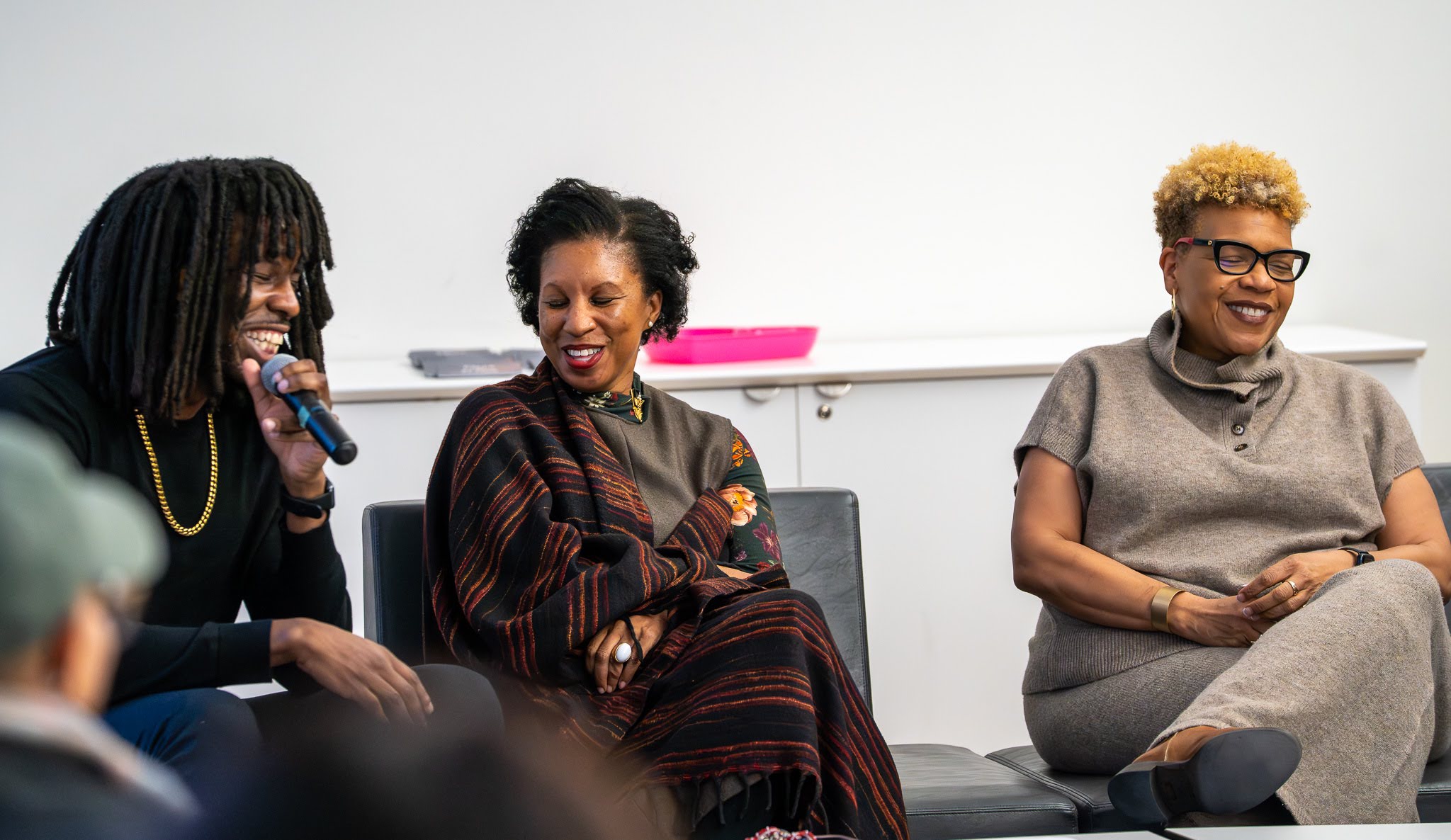
During Black History Month in February, Black social work students and faculty came together for a fireside chat that featured meaningful conversation, a discussion on Black futures in Social Work, and a catered meal from a local Black-owned business.
In January FIFSW’s registrar’s office collaborated with Hart House on a New Year Social to celebrate the end of the Fall semester and the beginning of the new year and Winter semester. Activities included button-making and board games over refreshments.
In February, students were welcomed back from the Winter Reading Week with a Welcome Back Event, where they were offered a range of self-care items, including face masks, shower steamers, facial tissues, as well as tea and coffee.
On March 9th and 30th, Alumna Susan Ramsundarsingh lead two guided meditation workshops to support students’ physical and mental wellbeing by providing effective strategies for stress management and mindfulness. And on March 16, students were invited to a Bob Ross Painting Tutorial, a relaxing activity and opportunity for social engagement.

Advancing Indigenous Student access and success
Lauren Akbar, FIFSW’s Indigenous Student Access Project Administrator, works for and with Indigenous students and partners to ensure FIFSW’s Indigenous students feel seen, welcomed, and valued, from recruitment to graduation.
This year she helped launch Year 1 of the Indigenous Student Access Enhancement Project (ISAP) to improve recruitment, reduce barriers to admissions, and strengthen resources for Indigenous MSW students. Working with colleagues, she conducted surveys and consultations with current and former Indigenous MSW and MSW-ITR students to better understand access barriers, student experiences, and support needs.She also engaged in direct relationship-building with Indigenous communities and organizations.
Other initiatives that took place this year included:
- Appointing the Faculty’s first Indigenous Faculty Advisor to provide dedicated support for incoming and continuing Indigenous students.
- Engaging Grandmother Shirley as an Elder to provide cultural guidance, mentorship, and ongoing support.
- Strengthening partnerships with campus resources, including the Writing Centre, Research Support, and First Nations House.
- Hosting orientation and community-building activities, including a virtual welcome session, campus tour, welcome breakfast and dinner, and a Truth and Reconciliation Day beading workshop.
- Creating opportunities for Indigenous students across cohorts to build relationships and connect with cultural supports.
- Improving recruitment efforts by hosting Strong Roots, Strong Futures: MSW Information Sessions for Indigenous Professionals, which engaged more than 80 participants and generated strong interest from prospective applicants.
FIFSW Student ambassadors
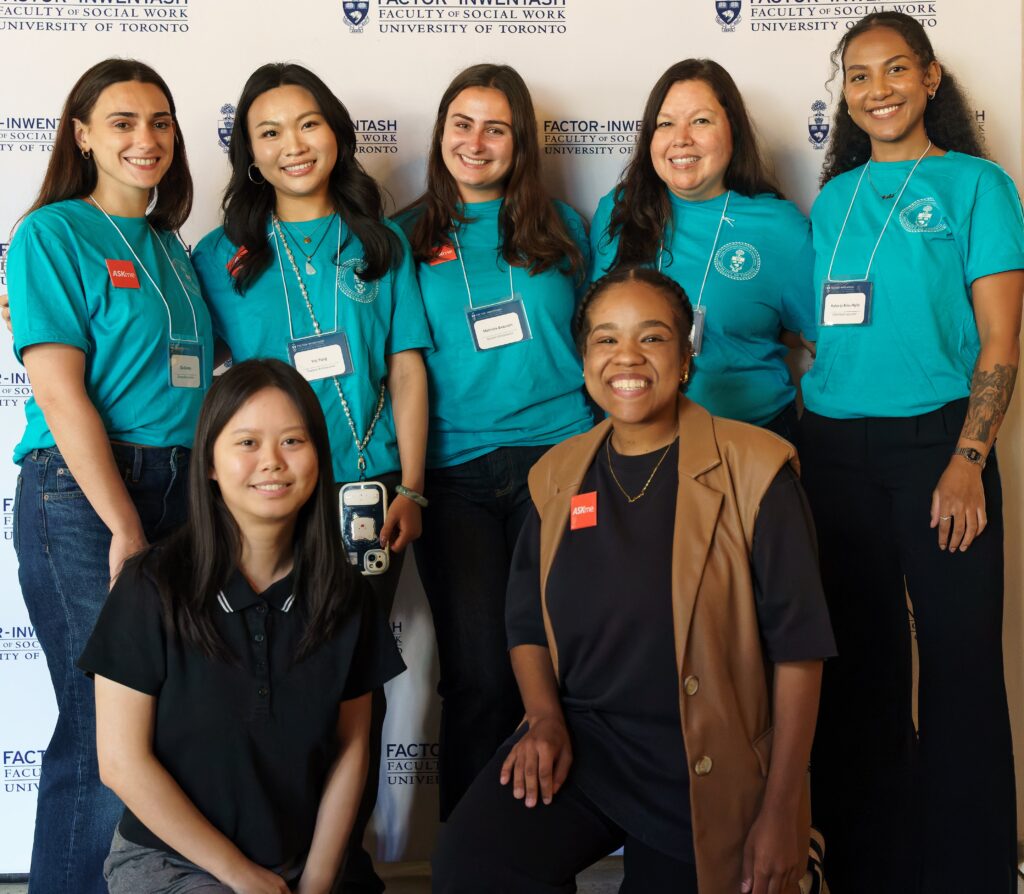
The Student Ambassador Program connects new and prospective students with their second-year peers. This year, we created roles dedicated to international and Indigenous students.
Student Ambassadors also support events, such as information sessions. They also keep everyone in the loop by sharing information about events and opportunities on FIFSW Connect, an online hub for FIFSW students, faculty, and staff.
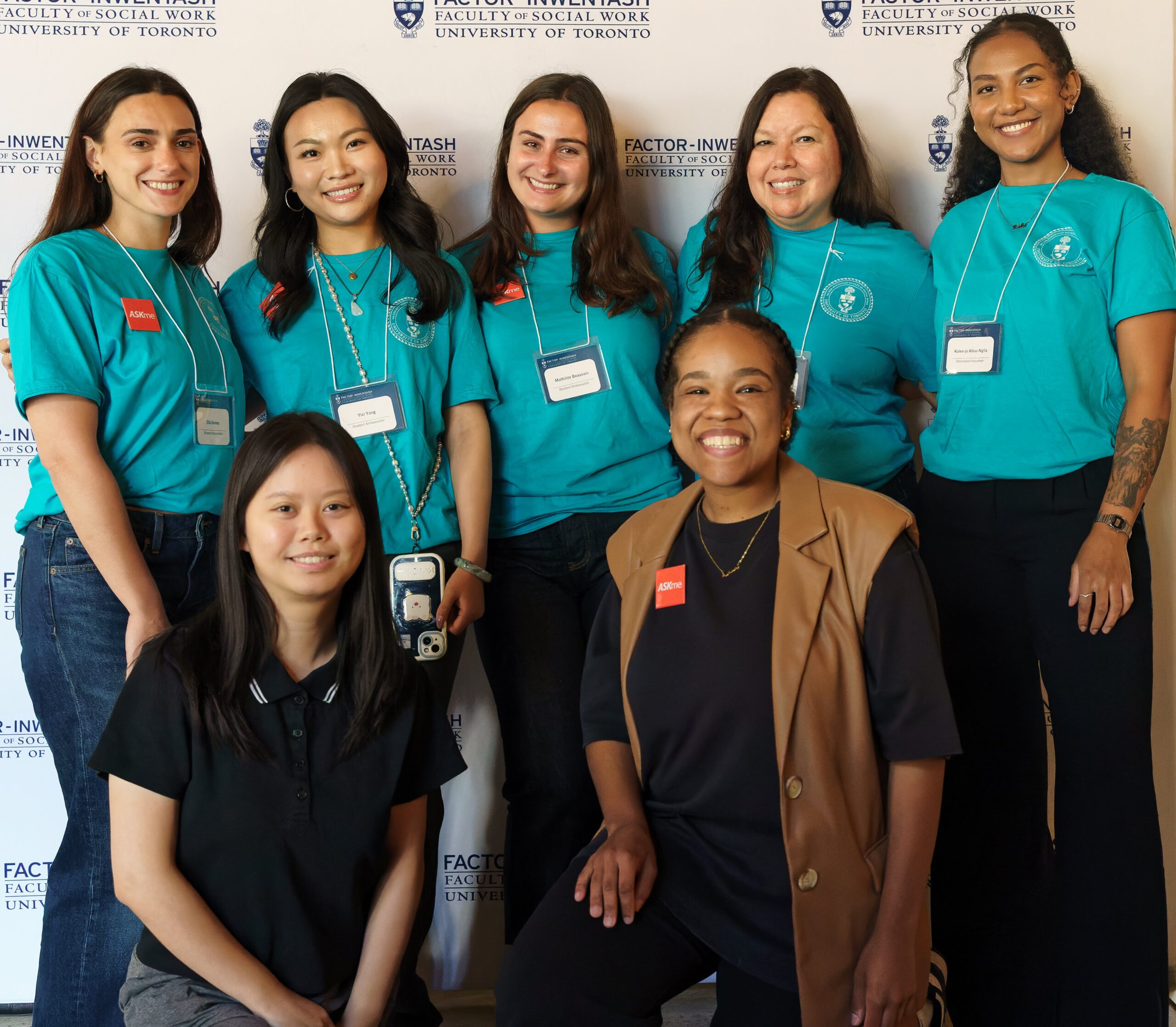
Many thanks to our 2025-2026 Student Ambassadors: Mathilde Beauvais, Ella Gomes, Sofia Rojas, Yixi Yang, Aiisha Rishi, Paige Rice, and Linxiao Zhang!
Life-long learning and wellness for alumni
FIFSW Alumni Association events
By the numbers
7 online lectures
312 total participants
63 newly engaged alumni
Topics covered in this year’s Alumni Association Lecture Series included eye movement desensitization and reprocessing (EMDR) therapy; grief, loss and bereavement across the life course; the role of allies in advancing collective change; combatting racial trauma and burnout; experiential & attachment-based approaches to healing through connection — and more.
The 2026 Alumni Association Distinguished Speakers Series celebrated 100 years of the Canadian Association of Social Workers, with a lecture by Fred Phelps (pictured, top, left), Executive Director of the Canadian Association of Social Workers, and Ajiroghene Evi (pictured, top, right), CEO of the Ontario Association of Social Workers. Their talk reflected on social work’s history in Canada and Ontario, including the ways it has both advanced care and contributed to inequities.
Alumni Thrive
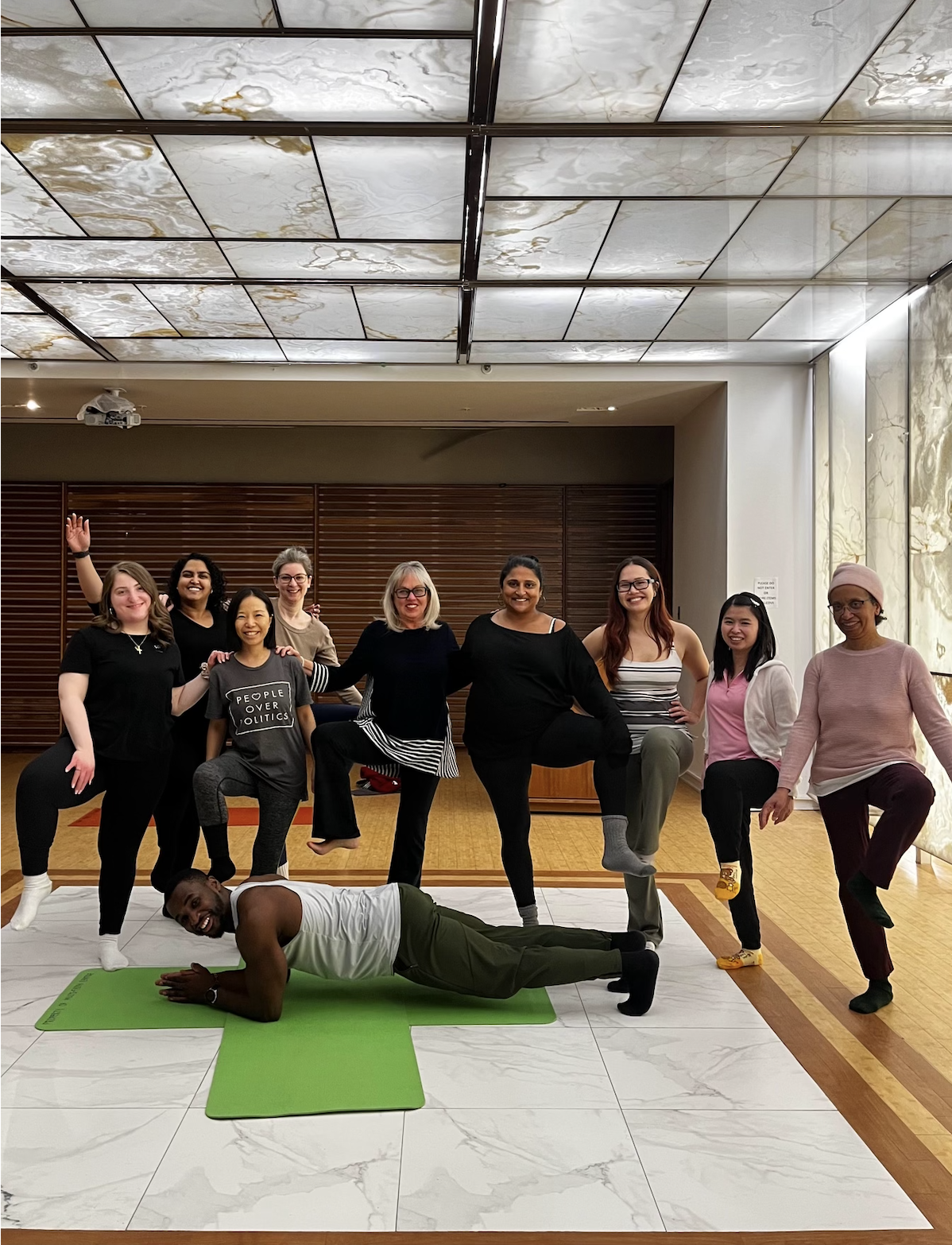
This year we launched “Alumni Thrive” — a set of in-person sessions created for our alumni community to promote self-care and professional sustainability for social work professionals, with opportunities to engage with peers and build new connections. The free sessions included therapeutic yoga (led by alumna Julia Gibran), mindful mediations (led by Professor Ramona Alaggia and Professor Emerita Ellen Katz), and “flow” (led by fitness and Pilates expert Arafat Opar).

Strategic Direction 5: Advance diverse approaches to promoting social justice, environmental justice and human rights

Building capacity for social workers as change-makers requires diverse approaches to research and practice that value community partnerships, practice innovation and advocacy. FIFSW faculty, alumni, partners, and students are drawing from their research and practice to develop solutions and speak out.
New research led by Associate Professor Izumi Sakamoto is one a good example of this work. In 2026, she received funding for two projects that examine how art, activism, and intergenerational dialogue can help young Japanese Canadians challenge traditional understandings of identity and community, forge stronger connections, and build a more inclusive future. Conducted in partnership with Japanese Canadian youth, the research project also involves collaboration with the Japanese Canadian Cultural Centre (Toronto), Powell Street Festival Society (Vancouver), Tonari Gumi – Japanese Volunteers Association (Vancouver), and the Young Japanese Canadians of Toronto.
Professor Tanya Sharpe’s research has directly informed her advocacy for Black survivors of homicide victims. In November, the Centre for Research and Innovation for Black Survivors of Homicide Victims (The CRIB), which she leads, released a report on Gun Violence in Canada, exposing deep racial disparities and the need for community-centered and trauma-informed responses to firearm violence prevention. “Our report addresses notable gaps in research on the indirect and long-terms consequences of gun violence and the need for holistic, trauma-informed, and community-centered responses,” says Dr. Sharpe.
A high-level report authored by Professor Barbara Fallon and Assistant Professor Tara Black showed that while Innu children in Newfoundland and Labrador were less likely to be removed from their homes compared to a decade ago, they are still overrepresented in the child welfare system. Their report, along with a pre-recorded testimony from Fallon, contributed valuable insights for the Inquiry Respecting the Treatment, Experiences and Outcomes of Innu in the Child Protection System, which has been ongoing since 2023.

Advocacy rooted in research
In May, Professor Carmen Logie wrote an article for the SGDs@UofT website on why water matters for sexual health in a changing climate, drawing on her extensive international research in Uganda and Kenya. “Strengthening water and sanitation systems, supporting food security, and advancing gender equality are not only environmental or development priorities — they are also essential strategies for protecting sexual health and advancing the wellbeing and rights of communities most affected by climate change and HIV,” she writes.
Research led by Professor Amanda Grenier supports calls for including the voices of those with lived experience in dementia research. “Our findings show that exclusion is rarely inevitable; it is designed into systems and thus, can also be redesigned through intentional, inclusive and rights-based approaches,” says Grenier. “Inclusion is not just ethical; it is a legal and human rights imperative under frameworks like the UN Convention on the Rights of Persons with Disabilities.”
Kyle Ganson, who was promoted to Associate Professor July 1, 2026, was part of an international group of researchers calling for adaptive regulations and more research on injectable peptides used among boys and young men. “Current regulatory systems were not designed for substances that operate across medicine, wellness, and illicit markets simultaneously,” said Ganson of the University of Toronto. “This creates instability and confusion, where changing rules may actually drive individuals toward unregulated and potentially riskier sources.”

Alumni impact
In September, we highlighted Lev Goldberg’s 51 kilometre swim across Lake Ontario for transvisibility. Goldberg (MSW 2020) became the first openly transgender person to swim across Lake Ontario, a feat through which he was also able to raise funds for LGBT youthline.
In April, we shared how our partner agency, Jewish Family and Child Service, has been working across services and generations to support underserved communities. “We were formed at a time when the doors were closed to us,” JF&CS CEO Talyah Breslin says of Jewish organizations established in the late 19th and early 20th centuries. “But we all universally made the same decision, which guides us today: that we will never close our doors to anybody else in need.”
Combining her dual expertise in education and social work with her lived experience, Krystal Brant took on a new role as an Indigenous Relations Specialist at Niagara Health after completing the MSW-ITR program. Brant’s new position focuses on educating employees on Indigenous history, healing traditions, and intergenerational trauma through staff development programs and consultations. The big-picture aim, says Brant, is to make healthcare systems feel safe and welcoming for Indigenous people.
Supporting Child Victims of Abuse Through the Criminal Justice System

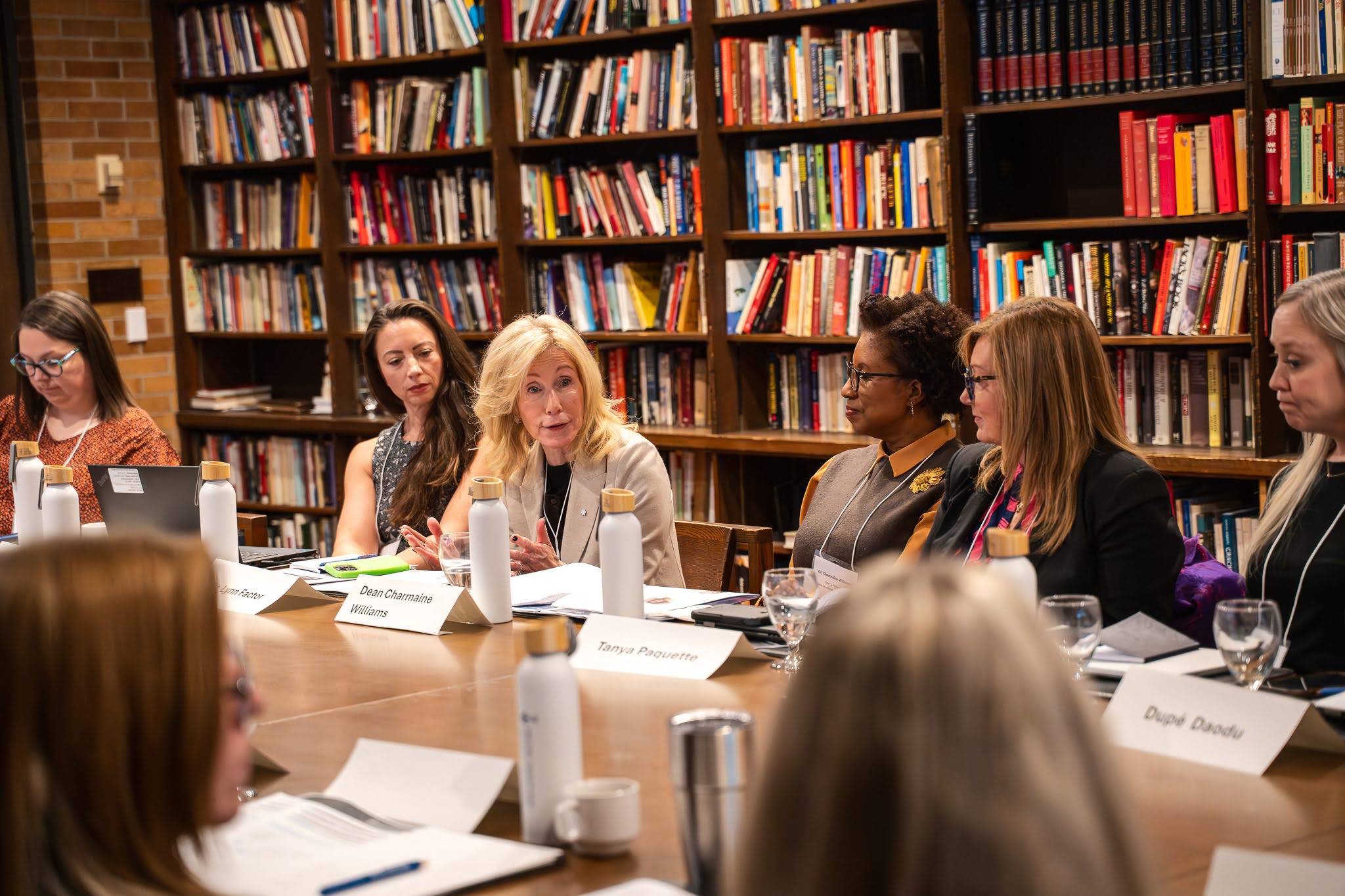
The 2025-2026 Janis Rotman Roundtable brought together social workers, victim advocates, researchers, legal professionals, policy makers, and system stakeholders to address the complex challenges faced by survivors of child abuse and their loved ones as they navigate the criminal justice system. Hosted by FIFSW in partnership with Victim Services Toronto, the Roundtable examined how professionals across disciplines can collaborate to create more compassionate, trauma-informed, and effective pathways to justice. By bringing together an interdisciplinary group of experts, the Roundtable helped generate ideas and potential solutions for further study and advocacy, including recommendations for cross-disciplinary training and education.
Giving for change
A new book by alumna Margaret McCain takes readers on a compelling journey through the history of the landmark Early Years Study – Reversing the Real Brain Drain and follows its impact all the way to the creation of Canada’s first national universal childcare and early childhood education system.
Punctuated by lively behind-the-scenes accounts of how policy becomes reality, the book, Giving for Change: How Philanthropy Shapes Early Education, is a must-read for policymakers, educators, social workers, and philanthropists alike.
Faculty awards
Barbara Fallon
Royal Society of Canada Fellowship (2025)
Carmen Logie
Royal Society of Canada College Membership (2025)
Peter Newman
Canadian Academy of Health Sciences (CAHS) Fellowship (2025)
Keith Adamson
Canadian Association of Social Workers Distinguished Service Award (2026)
Rachelle Ashcroft
Ivy Oandasan Leadership Award of Merit for Outstanding Contributions in Advancing Interprofessional Education (2026)
Lin Fang, Talk It Out Counselling Clinic
Journal of Social Work Education, Best Field Note Award
Faculty promotions
Cheryl Regehr was appointed a Distinguished Professor in Social Work for a five-year term.
Rupaleem Bhuyan became Director of the Centre for Critical Qualitative Health Research, starting Janyary 1, 2026. She was also named the inaugural Eakin-Hoffman Chair in Critical Qualitative Helath Research.
Kyle Ganson was promoted to Associate Professor, effective July 1, 2026.
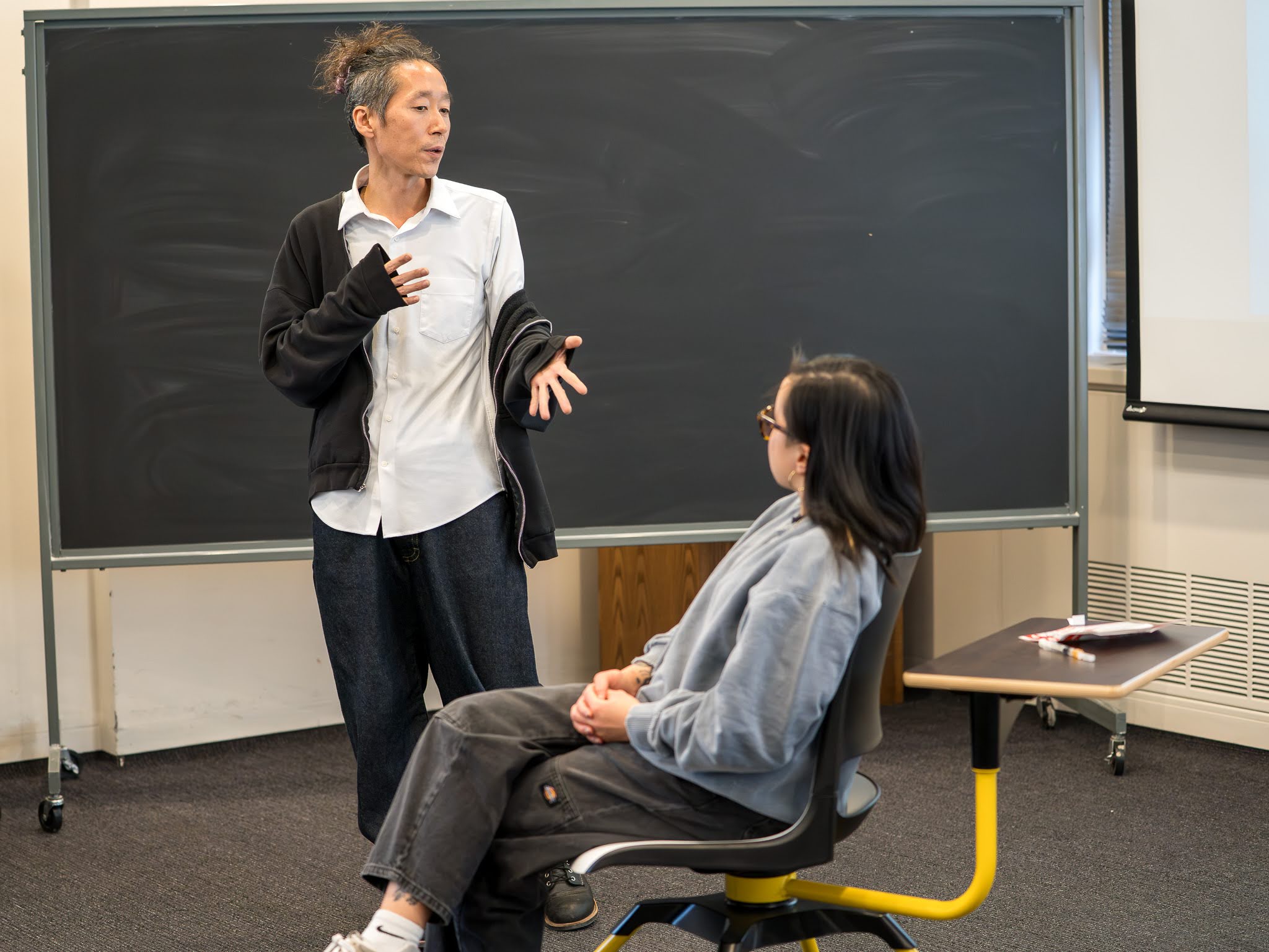
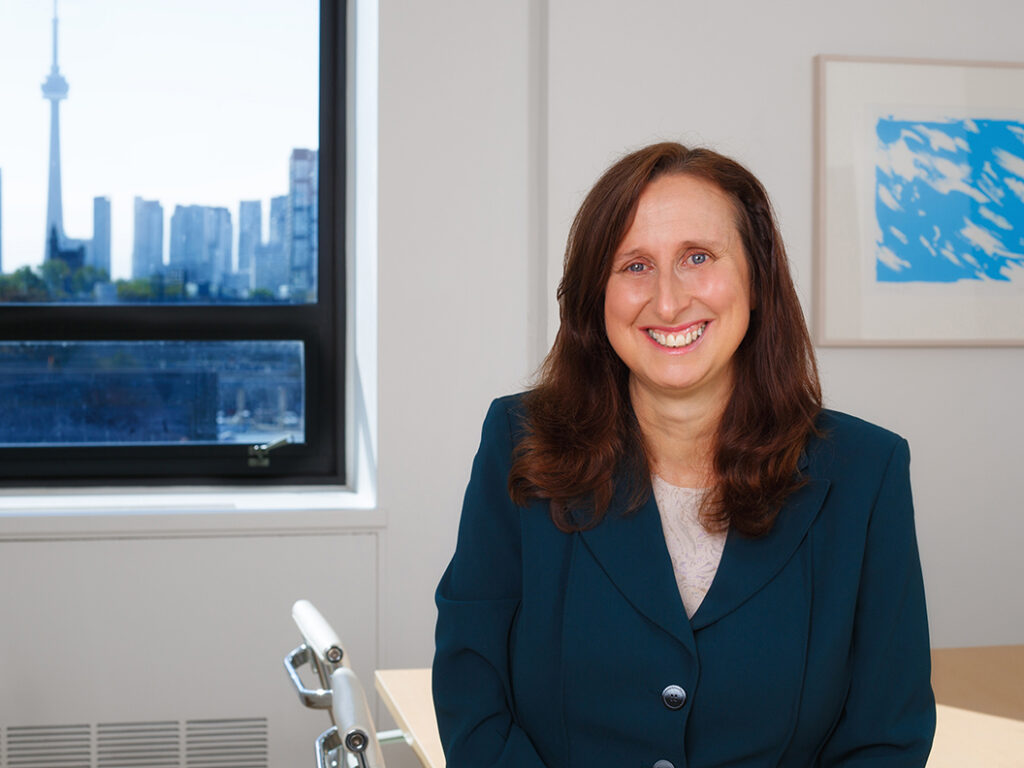
Tin Vo (pictured below) was appointed Assistant Professor (Tenure Stream), effective July 1, 2026.
In memoriam
Dr. Régine Uwibereyeho King
Dr. Régine Uwibereyeho King, whose deep commitment to healing, reconciliation, and forgiveness has left an indelible mark on the field and improved the lives of many, passed away in June 2026.
Dr. King received a Master of Education in Counselling Psychology and Community Development from the Ontario Institute for Studies in Education (OISE) in 2003 and a PhD from FIFSW in 2011. She completed her postdoctoral studies at CAMH and was an Assistant Professor at the University of Manitoba prior to joining the University of Calgary’s Faculty of Social Work, where she became a professor.
An internationally respected transdiciplinary and transnational researcher and educator, Dr. King’s community-based studies focused on racial justice, cross-cultural mental health, social processes of healing, forgiveness and reconciliation, critical pedagogies, and African Indigenous knowledges. Her publications attract readers from across the globe in the areas of truth and reconciliation, intergroup dialogue, healing approaches to collective trauma, anti-Black racism, refugee mental health, transnational social work, and critical pedagogies.
“This is a huge loss to social work and the world,” says Dean Charmaine Williams. “Her research was a work of love and hope for the people of her homeland in Rwanda. It was an honour to be a witness to her scholarship and her accomplishments.”
Professor Emerita Blossom Wigdor
Professor Emerita Blossom Wigdor, the Founding Director of the first program in gerontology at a Canadian university, passed away on October 25 at age 101.
Professor Widgor founded the University of Toronto’s first program in gerontology in 1979. In 1989, when the program was transformed into the Centre for Studies on Aging she was the founding director. In 2005, the Centre became the Institute for Life Course and Aging, an interdisciplinary and interprofessional institute now housed at the Factor-Inwentash Faculty of Social Work.
“Dr Wigdor’s courage to chart new territory in gerontology gave all of us a foundation to build upon — her legacy lives in every gerontological scholar, every practitioner and every community who benefits from her work,” says Professor Esme Fuller-Thomson, ILCA’s Director. “It is clear how one person’s lifelong dedication can transform a field. Her vision continues to guide us at the Institute for Life Course and Aging.”
Staff changes
At the end of 2025, Shahana Arain decided to leave her role FIFSW’s Director of Equity, Diversity, Indigeneity, Inclusion and Accessibility. Shahana joined FIFSW in October 2023, at a time of extreme turbulence both within the Faculty and in the wider world. From her first days with us, she stepped into that complexity with steadiness, kindness, and courage. As EDIIA Director, she was a clear and trusted point of contact for those seeking support, guidance, or accountability.
In the new year, Professor Tanya Sharpe assumed the role of Acting Director, Equity, Diversity, Inclusion, Indigeneity, and Accessibility. Dr. Sharpe has balanced her duties as Director, EDIIA with both teaching and her ongoing research as Director of The Centre for Research and Innovation for Black Survivors of Homicide Victims (The CRIB). Her work as EDIIA Director has been supported by Faculty leaders at FIFSW and the University of Toronto.
In the Fall, FIFSW welcomed Maria Panagiotopoulos as Registrarial Services Coordinator while Jenny Wang is on secondment until August 2026. Maria is a recent graduate of the University of Toronto, Trinity College. In 2022, she began a work study position at the Faculty of Applied Science & Engineering and remained there as an Undergraduate and Admissions Assistant until June 2025. Maria has been a wonderful support for students as a member of the Student Services and Registrar team.
We were also pleased to welcome Angel Blaize to the Faculty in the Fall as FIFSW’s new Student Engagement Coordinator. Angel stepped into the role previously held by Raaz Einypourfazli, who welcomed two years’ of classes at orientation, revamped the Alumni Mentorship Program, and steered our Student Ambassadors program. Before joining FIFSW, Angel was part of the Student Life team at University College where she supported student leadership development and program delivery — skills that have helped her build on Raaz’s efforts to further boost student outreach, engagement, and support.
In April, Jeremy Nichols left his role as Recruitment, Admissions and Programs Assistant to pursue an exciting new opportunity at U of T. Working in the Main Office, Jeremy provided exceptional administrative support to our PhD program. To ensure that admissions welcoming our newly admitted students and PhD students remain supported while we searched for a replacement, we were happy to welcome recent MSW graduate Kalee-Jo Kiluu-Ngila to the team.
Kit Lu took on the role of Recruitment, Admissions and Programs Assistant on July 21. Kit brings over nine years of experience in higher education administration, with a background in admissions, credential assessment, student services, and program administration. She is passionate about providing excellent service, improving processes, and collaborating with colleagues to support student success.