Supporting Child Victims of Abuse Through the Criminal Justice System: A Collaborative Approach
Message from Dean Charmaine Williams
When child abuse takes place, pursuing justice for survivors by prosecuting those responsible is seen as key to their recovery. It’s also considered an important tool in preventing further abuse. However, what if the system set up to bring justice to survivors inadvertently acts as a second site of harm and trauma? What if seeking justice through the legal system is too great a risk?
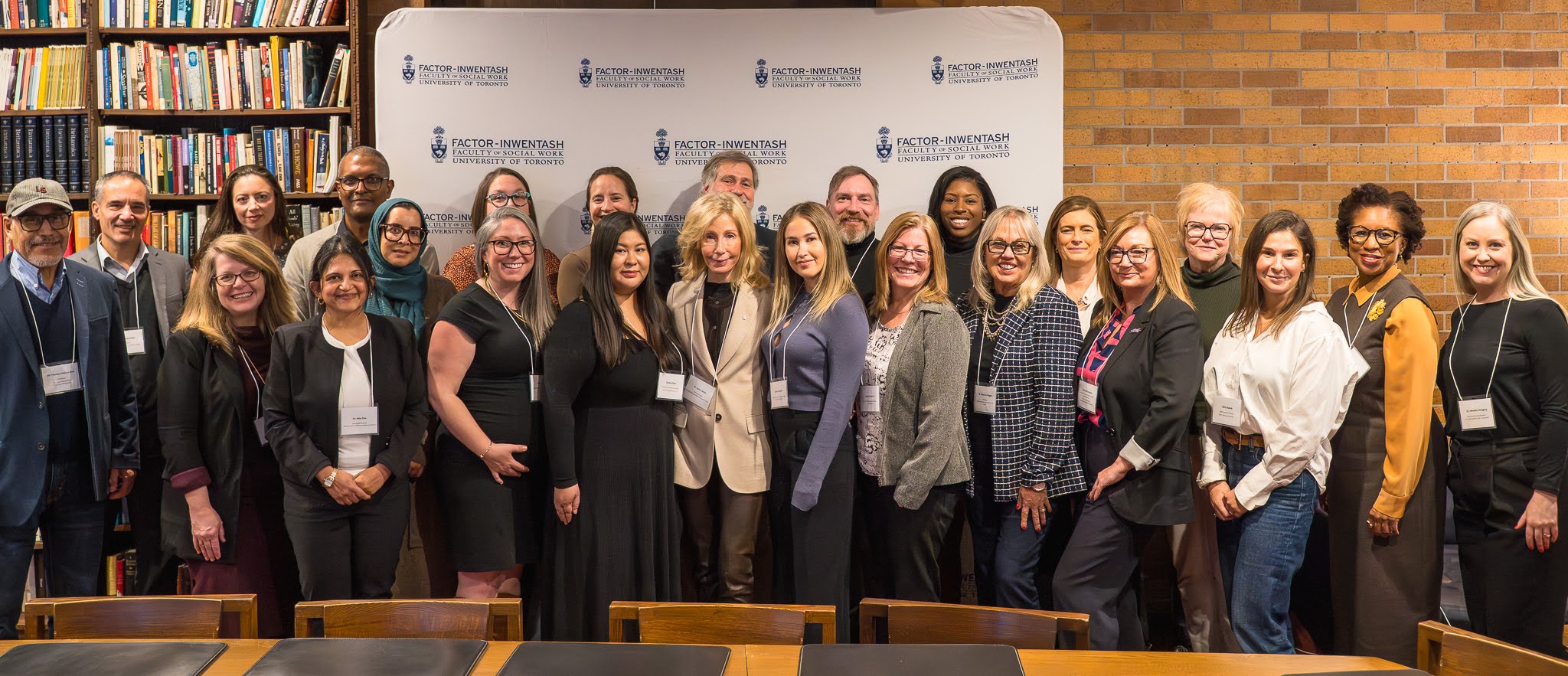
The 2025-2026 Janis Rotman Roundtable brought together social workers, victim advocates, researchers, legal professionals, policy makers, and system stakeholders to address the complex challenges faced by survivors of child abuse and their loved ones as they navigate the criminal justice system. Hosted by the Factor-Inwentash Faculty of Social Work (FIFSW) in partnership with Victim Services Toronto, the Roundtable examined how professionals across disciplines can collaborate to create more compassionate, trauma-informed, and effective pathways to justice.
Childhood abuse is a profound issue with devastating consequences. Justice for survivors, however, is often elusive. At present, only a small percentage of child abuse cases are reported to authorities, and conviction rates remain low. Moreover, despite advances in trauma-informed approaches, re-traumatization during legal proceedings remains high as not all sectors are trained in trauma-informed practice.
The experiences of child survivors of abuse as they navigate the criminal justice system is often seen as a problem to be solved by advocates for children and youth, who are often social workers. But as our Roundtable participants demonstrated and discussed, multiple sectors and professions need to be more aware and more prepared to be active change agents in the system. This awareness and preparedness must translate into sustained, coordinated, and integrated action across disciplines and organizations.
The goal of our Roundtable was to bring together diverse experiences and perspectives to identify gaps in policy and practice that impact child survivors of abuse and their families as they seek justice. By convening an interdisciplinary group of experts, we aimed to generate ideas and potential solutions for further study and advocacy, including recommendations for cross-disciplinary training and education.
FIFSW was thrilled to partner with Victim Services Toronto (VTS) on this important topic, an example of our efforts to mobilize relationships with practice communities to promote ongoing learning, strengthen evidence-based practice, and advance meaningful change (as outlined in FIFSW’s 2025-2030 Academic Plan). With VTS’s help, we were able to gather more than 25 participants to join us for a 4-hour formal discussion, punctuated by informal discussions over lunch.
I would like to thank Janis Rotman, for inspiring these important Roundtable discussions. A generous philanthropic leader, Janis has long been dedicated to supporting programs that benefit youth and help children in need. The Roundtable is an extension of her impactful work.
The summary of our conversation, linked to below, provides a high-level overview of the main issues, ideas, and solutions discussed. For those interested in digging deeper, we’ve also put together a list of resources, including peer-reviewed articles, reports, and stories that were shared with us by many of the participants. Lastly, we have included bios of all the Roundtable participants, along with links, if applicable, to the websites of the organizations they represent. We hope that this shared knowledge can contribute to efforts to reshape, policy, practice, and education to improve support for survivors of abuse.
Sincerely,
Charmaine Williams
Dean & Professor Sandra Rotman Chair Factor-Inwentash Faculty of Social Work
The 2025-2026 Janis Rotman Roundtable was hosted in partnership with Victim Services Toronto. VTS provides trauma-informed support and advocacy in the moment for any person in Toronto who has experienced crime or sudden tragedy. It also work to prevent violence through community engagement.
Carly Kalish and Alison Albright of Victim Services Toronto
Phishing Emails Please Note: Some students have been receiving phishing emails. Communication sent from the University of Toronto will never ask you to click on or send personal or financial information to an external login or email. Learn more about phishing emails and how to report them.